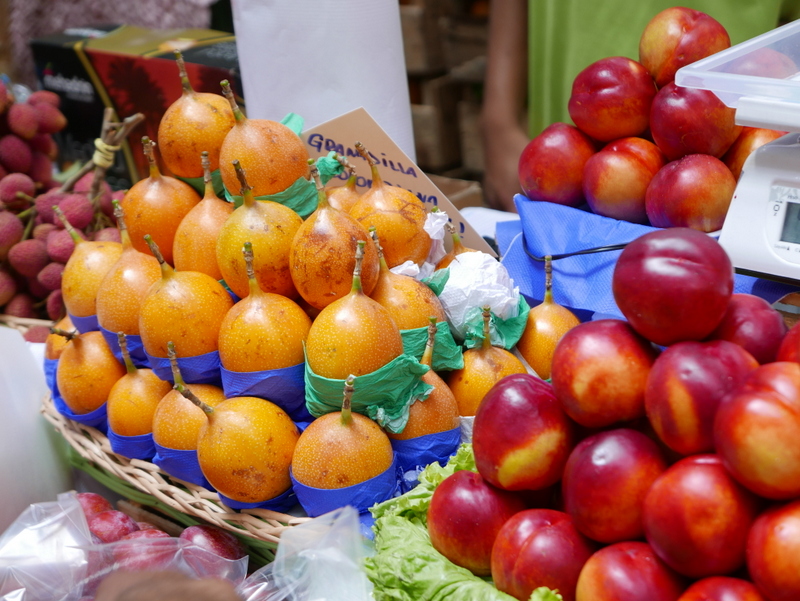
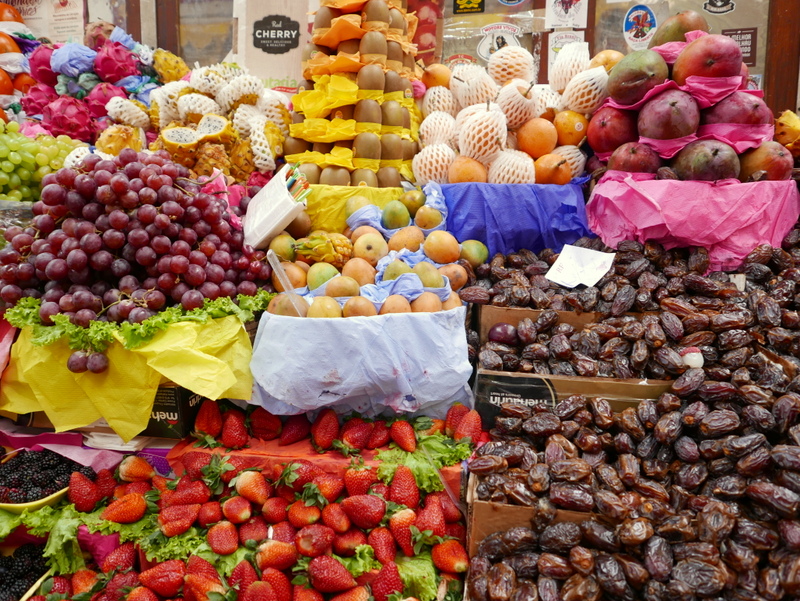
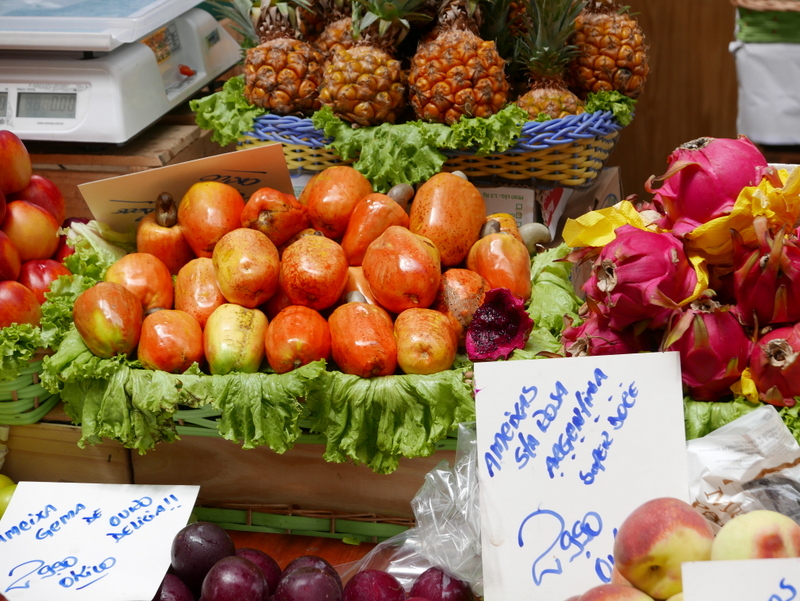
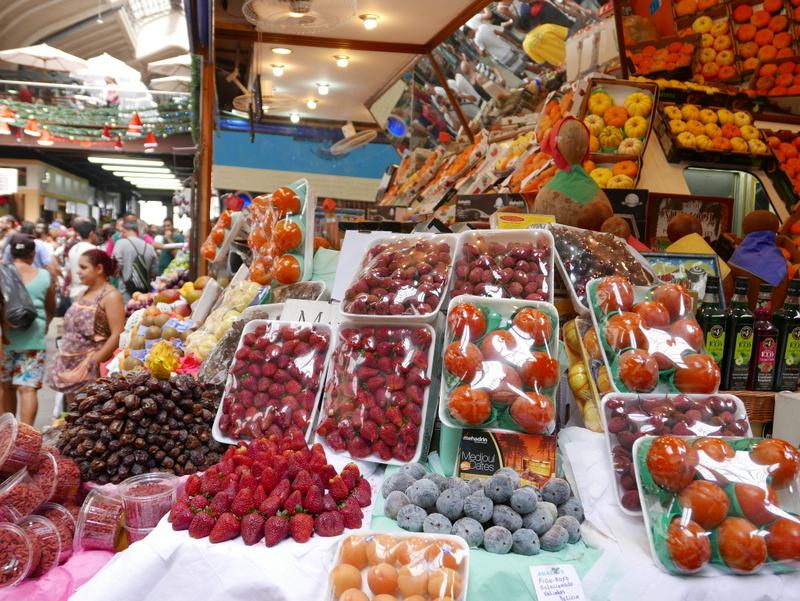
beautuful carambola doce freshly picked

While visiting Vitória north of Rio de Janeiro, the thing that I look forward to the most (after the company, of course) is suco de carambola or starfruit juice. Starfruit were simply not that common during my childhood in Northern Virginia. Sure they were around occasionally, but were really expensive, often a few dollars each. I remembed being fascinated by the cut slices. They look like stars, as everyone knows. Somehow that suggested a divine plan to the Universe to my naive mind. It would take a higher power of some kind to invent a fruit that reveals stars to the initiated. Wow.
To make them into juice never seemed like a possibility until my first visit to Luis and Sávio´s home. Ten years ago, Luis presented a pitcher of starfruit juice as if it were nothing at all. It seems that they have relatives with carambola trees and they can´t get rid of the fruit fast enough. Can you imagine!?! I was completly bowled over by it.

Superficially the juice looks like orange juice. But it doesn´t have any tart citrusy flavors at all. Instead it is mildly sweet with a creamy texture and a hard-to-identfy flavor perhaps most akin to pears? Though it´s much better than that! The fruit itself sends of this exotic aroma that is truly heavenly.

This visit, Luis had about a hundred of the fruit waiting for my arrival! What a thoughtful friend and host. I had four glasses over breakfast that first morning.

slice the fruit and pop into a blender

Suco de Carambola

1 to 2 dozen starfruit, rinsed
some water to adjust thickness of juice
ice

Slice fruit.  Blend the starfruit with a bit of water to get the thickness that you like. Serve in a pitcher with ice.

I´ve also had this with a bit of vodka added, which makes a wonderful cocktail. Until I grow my own carambola tree, I´ll likely not make this one at home. A pitcher of the stuff could easily set me back $75 or more. I´d rather come to Brazil and spend the money at home on French wine ;)

fresh carambola juice for Brazilian breakie


carambola on the tree

{ 0 comments }

I saw a 4-pack tray of sweet corn on the cob at our branch of TJ’s last week which made me long for summer. Aah! Summer sweet corn is the absolute best! It’s been so cold lately. Plus produce, aside from root vegetables, the cabbage family and of course citrus, all starts to look and taste a little flabby in January. In the summertime, sweet corn is at its peak in taste and is incredibly cheap. Often you can buy five ears for only a dollar, and sometimes even less. What a bargain that is.

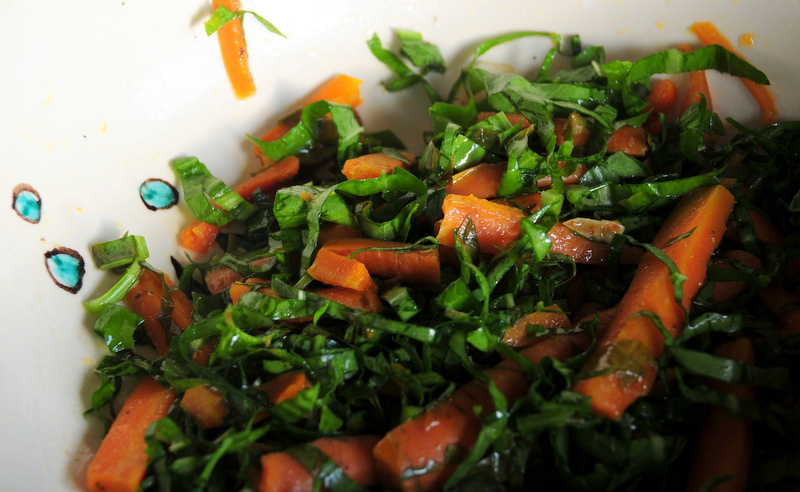
collard greens with peas and sweet corn

I don’t even know where this sweet corn came from as the container says somewhat vaguely that it was packaged in the US. It must be from somewhere overseas, perhaps from Chile? I don’t want to think too much about carbon footprinting today…

So to celebrate summer in the heart of winter, I offer you this corn with collard greens dish. Now if only there was some country music to go along with this meal, all would be right in the universe!

This recipe is tasty and healthy. It’s cholesterol-free, and is packed with tons of vitamins, fiber and even protein. You can serve it as a side dish or eat it as a main course. It’s a little like quinoa love sans quinoa and tofu, but still full of love.

Collard Greens with Peas and Sweet Corn

4 ears sweet corn, kernels cut from cobs
1 bunch collard greens or Kale, rinsed and cut into thin strips (julliened)
½ bunch parsley, chopped
1 cup frozen garden green peas
3 cloves garlic, minced
4 tbsp extra virgin olive oil
Kosher salt to taste
fresh black pepper to taste
dry red pepper flakes to taste

How to:

Heat two tablespoons of olive oil in a skillet. Add garlic and sauté for few seconds until fragrant. Add corn and sauté stirring constantly for about 5 minutes. Add salt and pepper followed by the collard green. Stir. Add frozen peas. Cover pan and let it cook for another 5 minutes or so. You will know it is ready when collard greens have reduced to about a 1/3 of the original volume. Otherwise cook a bit longer. Adjust seasoning with more salt, pepper, red pepper and/or olive oil. I guarantee your guests will love it.

{ 1 comment }

“…some people take drugs to chemically induce a happiness they cannot otherwise achieve; others drink to excess for the same reason. Still others throw themselves into religious frenzies in a bout of self-intoxication. All are seeking happiness. But happiness, even Heaven, is the absence of further progress. When one is happy, one wants no more than that, and will spend his life in a search to keep the brain’s pleasure center permanently on. It is the essence of humanity. We learn, we progress, by our unending quest for eternal happiness—yet should we achieve it, it all stops.”

from Soul Rider book 3: Masters of Flux and Anchor

Jack Chalker published the Soul Rider series in the mid-Eighties, a bit after the first five novels in the Well World Series but before he returned to that earlier series in the Nineties. The first three novels in Soul Rider are really one extended story in three volumes. It starts by describing the adventures of a young girl, Cassie, who grows up in a rural farming community in a place called Anchor Logh. Her planet, World, consists of twenty-eight “Anchors” all surrounded by this mysterious energy called Flux. Anchors are really like very large islands. They have conventional Earth-like properties and seem quite ordinary: filled with farms or factories; people live, work, have children and die all under the watchful gaze of the matriarchal Church in conjunction with the patriarchal local government.

these three look pretty happy to me

Flux is something quite different and generally frightening to most of these “Anchor-folk.” It’s a kind of energy field surrounding the Anchors that some people can manipulate with their minds. The strongest, called “wizards,” can create anything they wish out of Flux, including changing human bodies and even minds to completely control all those around them less adept at handling Flux.

The Soul Rider is something unknown even to itself but at the start of the first novel it is inexplicably drawn to Cassie and enters her mind as a kind of symbiot. Through various complex political machinations, Cassie along with a number of other young people are sold into slavery to Flux. The story is very intricate, with lots of schemes and counter-schemes, and like all good sci-fi, finishes with a nail-biting confrontation with the “end of the world” where all the mysteries are more or less explained. There’s even a “scientific explanation” given for magic. Meanwhile it’s quite a ride.

Cassie gets tortured, brainwashed, becomes a saint, a powerful wizard, a mother, a wife and a mindless sex slave at various times throughout the book. Her children and loved ones fare little better. Much of the author’s philosophizing is about the relationship between men and women and the human tendency to exploit one another. These people are not nice and they use their powers, magical and technological, ruthlessly. Church leaders, wizards, warlords, husbands and wives, lovers, parents and children, scientists and dreamers all backstab, manipulate or otherwise mess with each other for personal ambition or revenge. By the end, everything all sort of “works out,” but at a dreadful cost.

It’s in this context that the wizard Mervyn, one of “the Nine” whose mission is to protect World from the opening of the “Hellgates,” makes those pessimistic comments about happiness quoted above. Is it really true that happiness is merely a chemical reaction that the brain is striving to maintain at all costs? Are we all seeking that kind of happiness, and would everything really stop if we achieved it?

I’m constantly hearing people tell me that they’d be happy if they could just find that perfect girl/boyfriend, get a better job, have more money or less debt, have better health, weigh less (or, rarely, more), were younger or older, were the other sex, looked more attractive, lived somewhere else, you name it. Yet so often after achieving one of these dreams; an example for me was moving to California, which I’d been sure would make me ecstatically happy; the effect gradually wears off. I still love it here but I’m not intoxicated with delight every day. That’s always the problem with these wishes, isn’t it?

I’m not sure that I can agree with old Mervyn that drugs or drink are a way to achieve this exalted level of happiness. There is no doubt that these things affect the mood and sometimes that’s in the happiness direction. So often, though, drugs and alcohol in serious users tend to cause more problems than anything else. These sad folk end up taking more and more not to feel good but to avoid thinking and feeling bad about all their problems, including the problem of their drug dependency itself. Drugs are a dead end if you ask me.

So where does that leave us? Is happiness a mirage? Chalker’s characters in the Soul Rider series realize many of their dreams at various times but are mostly left angry and miserable as time goes by. At their best, they are at peace with compromises that they’ve made with the powerful forces around them. That’s it, though. Not “happy,” just “O.K.”

Perhaps it’s the model of “happiness” that’s the real issue. Peak happiness happens, thank goodness! It simply never lasts. Feeling good all the time sounds great on paper, but maybe it’s kinda unrealistic. Why not adjust our expectations to fit better with reality? That’s what Cassie et al. finally did on World. How marvelous to have these joyful bursts from time to time. Working toward a sense of general wellbeing, not the vanishing ecstatic extreme, is my goal. I get the idea that Chalker thought so too. If that’s true, than at least we can safely put Mervyn’s fear of the end of progress to rest. It will never stop because permanent ecstatic happiness is always out of reach. That’s not as gloomy as it sounds. Personally I enjoy things more when they’re mixed with things that are less exciting. It’s the variety that makes stuff interesting.

Reading this three volume novel made me very happy, at least for a while. The story’s disturbing but also thrilling and thought provoking. That good feeling is already fading and I only finished the third novel last night. I suppose that I’ll have to start on something else soon to get that literary “rush” once again. But I’m still feeling fine right now.

{ 0 comments }

winter is for blood…

by Heguiberto on February 2, 2010

Winter is the time for citrus fruits. Just look at this stunning blood orange that we got at the Alemany Farmers’ Market the other day. It tastes better than it looks, if you can even believe it! Yum!

blood orange

{ 0 comments }

When in doubt, have champagne

by Stevie on January 29, 2010

could these two stunning women be French?

I just finished Mireille Guiliano’s French Women for All Seasons, the sequel to her bestselling French Women Don’t Get Fat. Like the first, this book is a guide to thinness and the good life. The name for this blog entry comes from one of her section headings on wine; and just like champagne, this work is effervescent, sometimes silly or dry, but always a pleasure and always in style. Guiliano, somewhat mischievously, makes a big point of writing “I don’t do or recommend diets.” Surely that is a bit tongue-in-cheek as much of the text is about finding that slim you and learning to feel bien dans sa peau, or good in your skin, about it. Her fairly well-worn idea is that faddish, American-style diets don’t work. Well, duh. She offers, then, a plan for reshaping your outlook on food, drink and life in order to reshape your body; instead of starving yourself over a few weeks and then ballooning up again and again.

The book is divided into four main sections, representing the traditional four seasons. In them she develops her fashion ideas for each season with accompanying recipes using seasonal ingredients. These chapters are followed by a last few which offer specific guidance on other, related subjects; like developing a taste for wine, planning parties and entertaining, a special commentary on unusual (to Americans) French foods, and an amusing section in which she describes the meanings of some of the various French expressions that she sprinkles so liberally throughout the book. That last bit is rather infectious, non?

The book glows with Guiliano’s personal anecdotes about her childhood in France as well as her adulthood living and working in New York. She’s full of opinions about women’s fashion and deportment, exercise and the culture of food. Sometimes these bons mots seem harsh. This example struck me particularly, both because of its obvious validity and the writer’s brutal humor in exposing this common foible: “Others take the arrival of summer sun as the occasion to roast like poulets on a spit, heedless of common sense, let alone medical fact. Raising the bar for what constitutes a healthy glow, they compel their more vampirish sisters to slather on the tanner-in-a-tube, which leaves virtually all complexions some shade of cantaloupe.” She’s not that tough all of the time. Usually, Guiliano’s advice is more businesslike yet compassionate. To the nervous potential hostess, she writes:

I know a lot of people panic or obsess over looking and doing their best. We can all become insecure about hosting and sometimes have the feeling that people are coming to judge us. But that’s nonsense. Most of them will have made up their minds about you well before they ever show up; if they’ve accepted your invitation, that already says a lot. Besides, even reluctant acceptors still want to have a good time. Nobody shows up determined not to. Really, you’ve got them from hello.

No truer words were ever written!

Despite the book’s title, her helpful suggestions about weight and portion control can apply equally to both sexes. I’m curious about several of her recipes, especially the fiddle head fern pasta for springtime. I hope to make that one when fiddle heads return. A lot of the recipes call for dairy. This is French cooking after all. Guiliano’s not shy about using butter, eggs, milk and cream, seemingly with abandon. She’s no stranger to meat dishes, either. I passed over those recipes without incident. She confesses her chocolate addiction openly. This is one of her personal “offenders” that leads her down the path to overweight. This problem doesn’t prevent her from offering loads of decadent chocolate dessert recipes for the reader to drool over. Fortunately, I’m not that into chocolate, so I can handle it.

Many of the dishes that she describes are standard French stuff. She has her version of vichyssoise, also known as cold leek and potato soup, a few kinds of mousse, and oysters prepared several ways. I was enchanted with that last but still remain too intimidated by shucking them to really test-drive those recipes. Perhaps someday… She does have some more adventurous fare, like farfalle with edamame, and frogs’ legs, though these are few and far between. I liked her emphasis on eating good foods in season and frequenting farmers’ markets as a way to improve taste.

No doubt Guiliano’s central idea is correct: portion control and regular exercise accompanied by the occasional indulgence probably is the best way to reduce and maintain your desired weight. What makes her program innovative compared to the run-of-the-mill diet plan is that last, indulge-yourself-occasionally part. Have fun, but in moderation, s’il vous plait!

I enjoyed this book quite a lot but sort of wonder about what makes it so pleasant. The recipes are fairly traditional, her fashion suggestions are positively old-school (no jeans, now really!?!) and the plan for weight control is the same thing that my primary care physician tells me whenever I go in for a visit. I think that it must be all of the Frenchie stuff.

Guiliano’s life seems terribly glamorous. She lives in Paris and New York, where she owns apartments in both places; she has a summer home in Provence; she and her husband frequently travel to Italy where they go wine tasting with ancient barons and baronesses in Tuscany; she is a high level executive for the famous champagne house, Veuve Cliquot. She seems to have done everything, and with such style! Amazing!

What is it about French people criticizing America that makes a book such a delight?

{ 1 comment }

rainy view of the dam from Sbragia

Hurrah! We finally went to Sbragia! I’ve been wanting to go there for a while, as some of you already know. The last time that we went was a failure as the others (you know who you are) didn’t want to taste the wine because they didn’t like the look of the showroom/tasting room. I have to admit, it’s a bit crassly commercial and tacky. Nevertheless, the view of the Dry Creek Dam and the Valley is spectacular from the place and we even enjoyed the wines.

2008 Schmidt Ranch Sauvignon Blanc, Dry Creek Valley: This was pale yellow with a non-descript fruity aroma. It tasted of tropical fruit and though was dry; it had a sweetness to it.

window shopping at Sbragia

2007 Home Ranch Chardonnay, Dry Creek Valley: This was the highly rated wine in Wine Spectator that I sent to my sister, Deby, for Christmas. She loved it which is the reason that we trekked all the way to Dry Creek Valley in a January rainstorm.

The wine was a pale yellow with a “sweet” smell. It tasted buttery and was lighter than the Gamble Ranch chard.

2007 Gamble Ranch Chardonnay, Napa Valley: This was a transparent pale straw yellow. It smelled of wood and had a pleasing citrusy taste.

2007 Home Ranch Merlot, Dry Creek Valley: This was my favorite tasted today. It was a transparent purplish red. We noted ash on the nose. It had good structure with a long finish. We thought that it had a few more years of aging potential. Yum!

2006 Italo’s Vineyard Zinfandel, Alexander Valley: This was transparent brownish red. It had an herbal almost rotten vegetable smell. This medium bodied zin seemed less complex than the merlot. It was just nice.

2006 Gino’s Vineyard Zinfandel, Dry Creek Valley: This was a pale almost orange-ish red color. Wendy thought that it smelled of “blood.” It seemed flatter than the Italo Vd Zin with a shorter finish.

2006 La Promessa Zinfandel, Dry Creek Valley: This wine was a reddish purple color. It had a jammy aroma and tasted very fruit-forward. It wasn’t my favorite though Wine Spectator apparently rated it a 90.

yummy Sbragia merlot

{ 0 comments }

Still on my Silk Road Cooking: A Vegetarian Journey cooking kick, I made this bulgar and mung bean dish a few nights after Madras rice with yogurt. It’s January so the tomatoes aren’t very good right now. Instead of the fresh ones recommended in the recipe, I used store-bought oven-roasted tomatoes from Whole Foods. I’d intended on adding parsley to garnish the dish at the end but it turns out all I had was spring onion. Najmieh recommends dill. I skipped the butter “garnish” as I’ve lost the taste for it and now that my cholesterol is finally “normal” I don’t want to rock the boat unnecessarily.

Fertile Crescent bulgar and mung bean pilaf

I got my mung beans at the Sunset Super. I’d only ever used them for a Southern vegetable stew with saffron and lots of vegetables in a tomato base. It’s cool to find other exciting recipes for this simple-to-prepare (because it doesn’t require a lot of pre-soaking) and tasty bean.

Even with some improvisation, the dish turned out really well. It had a hearty nutty flavor. The tomatoes were tangy and sweet. We both liked it a lot. My beans weren’t quite done enough though still tasted great. Hegui is already talking about having it again sometime soon, of course, with a bit longer cooking time. Maybe I should have actually measured the water after all?

some key ingredients for Fertile Crescent bulgar and mung beans pilaf

Fertile Crescent Bulgar and Mung Bean Pilaf

1 cup mung beans, picked over and washed
4 cups water
2 ½ tsp Kosher salt
¼ cup vegetable oil
2 tbsp cumin seeds
2 large onions, peeled and thinly sliced
1 inch fresh ginger, peeled and grated
2 cloves garlic, peeled and crushed
1 Serrano chile, stem and seeds removed, chopped
2 cups bulgar
Black pepper
1 tsp sugar
½ tsp turmeric
½ cup oven-roasted tomatoes
Finishing olive oil and green for garnish

Combine mung beans, water and ½ tsp salt in saucepan. Bring to boil then simmer about fifteen minutes or until beans are tender.

Heat vegetable oil in a deep frying pan or wok until hot. Add cumin seeds and fry for about 10 seconds. Add onion and fry about fifteen minutes until onion is golden brown. Add ginger, garlic, chile, and bulgar. Fry about two minutes more to brown the bulgar. Add 2 tsp salt, black pepper, sugar, turmeric, tomatoes and mung beans with remaining water. Stir and bring to boil.

Simmer covered about 20 minutes or until water is absorbed. The recipe calls for dill as a garnish, which I didn’t have. If you do, toss some in now. I added spring onion which I had on hand. Toss together with some finishing olive oil (Najmieh adds butter here). Adjust salt if needed (we added more). Plate and serve.

{ 0 comments }

edible fish bones

by Heguiberto on January 22, 2010

edible fish bones

My father was a great fresh water fisherman. I remember when I was a kid seeing him escaping into the solitude of the forest early in the morning or late in the afternoon for his fishing/hunting trips. He did that for a hobby and the family got to eat those delicious fresh fish from the pristine waters of rivers and lagoons around my village in the beautiful hilly State of Minas Gerais, Brazil . There was a huge variety of fish, all with different names, sizes, colors, and textures. My mother would prepare them in many different ways so as to enhance the flavors. Except for the scales and innards, we ate everything. That’s right: everything, including the bones!

I especially liked it when she deep fried small fish or bony parts from the bigger ones. For the larger, she’d prepare the prime parts some other way. The fried bones became an exciting and fun amuse bouche: so crunchy, crisp and tasty. Yum! I loved it.

Some may say fried fish bones make a gourmet food that’s an acquired taste. Recently we had a marvelous example of this at Live Sushi. Others might be grossed out or complain that the practice of eating the fish bones is too primitive. I feel that they are just plain, delicious peasant food.

Last week at Sun Fat, my fishmonger advised me to get the wild red snapper, which was fresh and on sale. He cleaned it for me by removing the scales, innards and bones, then filleted it. I cooked the fillets separately but kept the bones to fry. Not only is not wasting food “politically correct,” but it’s good too, in a naughty way. So just like my mother before me, I deep fried my red snapper bones and enjoyed sweet memories while chomping this savory dish.

start with a very fresh fish

Edible Fish Bones

Canola oil for frying
1 red snapper skeleton sprinkled with salt and pepper

How to:

Using a deep pan, pour in enough oil so that the bones will be submerged about ¾ of the way while the fish is in the pan. Heat the oil on high. Once hot, gently place the bones in the pan, avoiding splashing oil. Fry for about five minutes or so. Try not to touch the frying fish too much as it will break apart. Adjust temperature up or down depending on how it’s going. You don’t want to burn the fish but it won’t fry properly if too cool. Using a tong, turn fish to fry the other side for about 4 minutes more. Remove from oil to a plate lined with paper towels. Let it cool a bit. Serve it as an appetizer with wedges of lime and a cold beer or a nice white Bordeaux or maybe even an oaky chardonnay.

The only down-side of this recipe, at least at my house, is that at it makes the whole place smell fishy for a few days. Oh well…

{ 0 comments }

Rued Winery, Sonoma County

January 21, 2010

We were cold and a bit liquored up after a picnic lunch in the rain in Dry Creek Valley the other day. That’s always a great time to try a new winery! Rued fit the bill for us: it was right across the street from where we had our luncheon and we [...]

Read the full article →

penne with bitter Thai eggplant

January 19, 2010

The guy selling me this lovely bitter fruit at the UN Plaza Farmers’ Market swears that it’s called Thai eggplant. I don’t know. It reminds me of a bitter vegetable that’s very popular in Minas Gerais, my home state in Brazil. There it’s called giló or jiló, which sounds like “jell-o” [...]

Read the full article →